The Ultimate UK Business Setup Guide for Expats: Start Your Venture Today

So, you’ve decided to take the plunge. You’re eyeing up the United Kingdom as the launchpad for your next big idea. That’s fantastic! Britain is a hub for innovation, creativity, and global trade. However, navigating the bureaucratic waters of a new country can feel a bit daunting. Don’t worry, though—we’ve got your back. This article serves as your comprehensive UK business setup guide for expats, designed to break down the process into bite-sized, manageable chunks.
Whether you’re dreaming of opening a quirky coffee shop in Shoreditch or a tech startup in Manchester, the fundamentals remain the same. Let’s walk through exactly how to turn that dream into a registered reality without getting a headache.





1. Check Your Visa Status First
Before we get into the fun stuff like naming your brand, we need to talk about the legalities. As an expat, your right to start a business in the UK depends entirely on your visa status.
If you are already settled in the UK with Indefinite Leave to Remain (ILR), you’re generally free to start a business just like a British citizen. However, if you are coming specifically to launch a company, you might need to look into specific visa routes, such as:
- Innovator Founder Visa: For those with a unique business idea endorsed by an approved body.
- Global Talent Visa: For leaders in academia, research, arts, or digital technology.
Always double-check the Home Office regulations before spending a penny on setup costs.
2. Choose Your Business Structure
Every UK business setup guide for expats will tell you that choosing the right legal structure is crucial. It affects how much tax you pay and how much personal liability you carry. Here are the two most common options:
Sole Trader
This is the simplest route. You are the business.
- Pros: Easy to set up, less paperwork, complete control.
- Cons: You are personally liable for any debts the business incurs.
Limited Company (Ltd)
This creates a separate legal entity from yourself.
- Pros: Limited liability (your personal assets are generally safe), often more tax-efficient at higher profit levels.
- Cons: More reporting responsibilities and administrative admin.
Most expats prefer the Limited Company route because it offers a layer of protection and looks more professional to potential B2B clients.
3. Registering Your Company
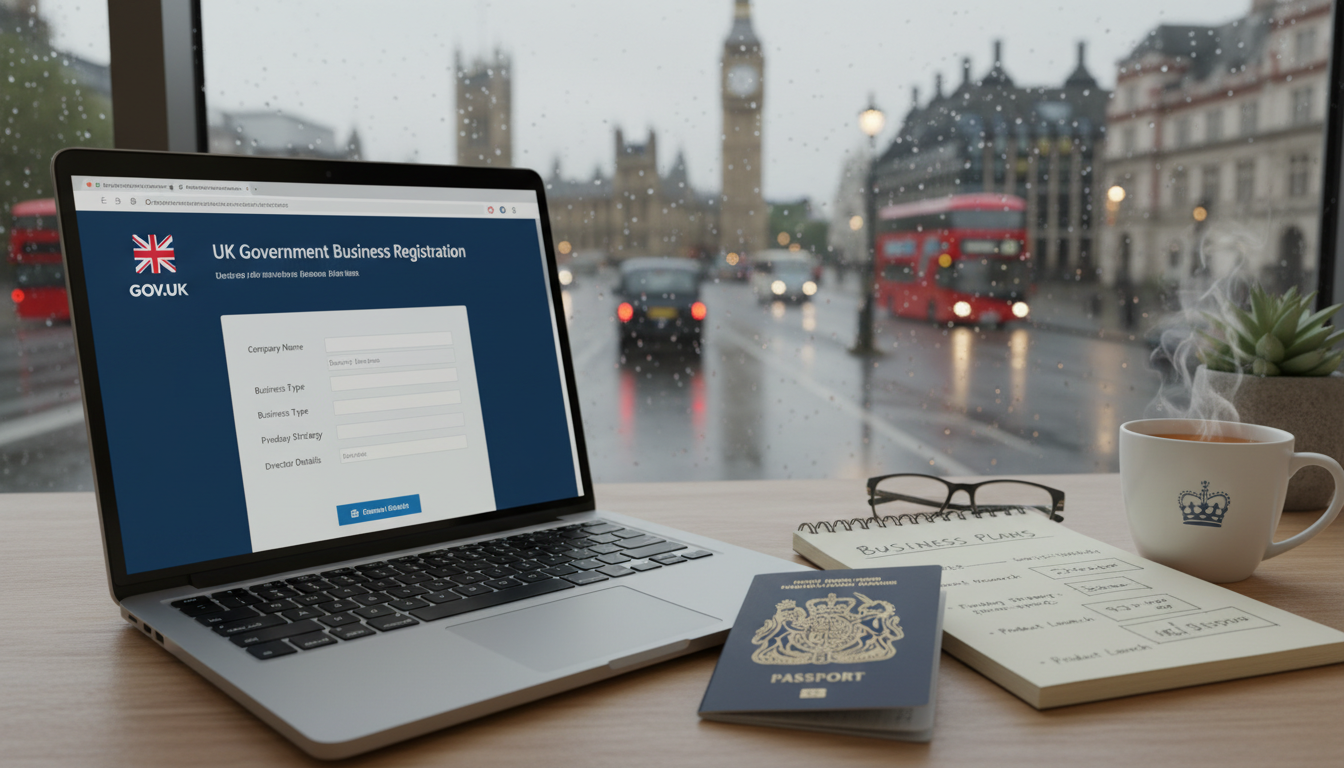
Once you’ve picked a structure, it’s time to make it official. If you’re going with a Limited Company, you need to register with Companies House.
Here is a quick checklist of what you’ll need:
- A Company Name: It must be unique and not contain restricted words.
- An Address: You need a registered office address in the UK (this will be public).
- Director Details: At least one director (that’s you!).
- Shareholder Details: Who owns the company?
- SIC Code: A code that identifies what your business actually does.
The online registration fee is surprisingly cheap (currently £50 as of 2024), and it can often be approved within 24 hours.
4. Sorting Out Taxes and Banking
No UK business setup guide for expats would be complete without mentioning the tax man. In the UK, the tax authority is called HMRC (His Majesty’s Revenue and Customs).
Corporation Tax
After registering your company, you must register for Corporation Tax within three months of starting trading.
Business Bank Account
This can be the trickiest part for expats. Traditional high-street banks can be strict about proof of address and credit history. Many modern entrepreneurs turn to digital challenger banks (fintechs) like Monzo, Revolut, or Starling, which are often much friendlier to expats and faster to set up.
5. Get Insured
Depending on your industry, you might need specific insurance. The main one to look out for is Employers’ Liability Insurance, which is a legal requirement if you hire staff. If you are a consultant, Professional Indemnity Insurance is also a smart move.
Final Thoughts
Starting a business abroad is a brave move, but the UK ecosystem is incredibly supportive. By following this UK business setup guide for expats, you are laying a solid foundation for success. Take it one step at a time, keep your paperwork organized, and don’t be afraid to seek advice from local accountants who specialize in expat finances. Good luck!